

Warm or Cool Light? Choosing Color Temperature for Your Home
Sheep Electrical • Homeowner Guide
Warm or Cool Light? Choosing Color Temperature for Your Home
Two bulbs can be equally bright and make a room feel completely different. Color temperature explains part of that difference—and it is easier to choose when you compare it in your own space.
Understand the label
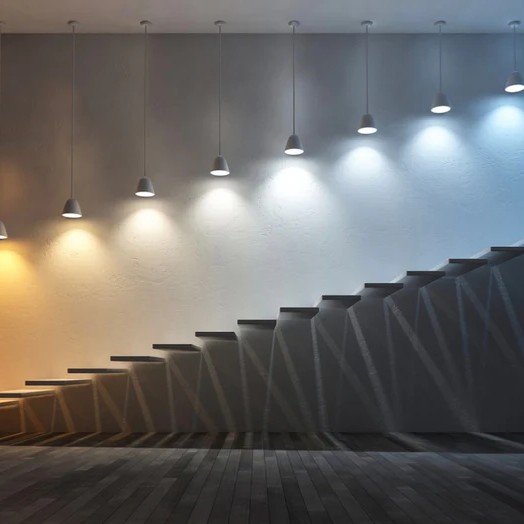
Lower color-temperature numbers generally describe a warmer appearance; higher numbers describe a cooler appearance. Common residential choices include 2700K and 3000K for a warm look, with 4000K and 5000K appearing cooler.
These labels do not tell you how bright the bulb will be. A cooler-looking bulb is not automatically brighter, and a warmer one is not automatically dimmer. Check lumen output separately.
Start with one room
Try a sample in the fixture where it will be used. View it during the day and after sunset, alongside your wall color, flooring, and furniture. A bulb that looks appealing in a store can feel different under a shade or next to another light source.
For open-plan spaces, consider the lights visible together. Keeping their appearance coordinated can make the room feel more settled, even when different fixtures serve different tasks.
Match the task and your preference
Warm light is a common starting point for living and dining areas. A kitchen, laundry room, or workspace may call for a different preference. There is no single color temperature that every room must use.
For mirrors and detailed work, placement, shadows, and color rendering also matter. Changing the color temperature alone will not fix a poorly positioned light.
Check dimming before buying a set
Confirm that the bulb or fixture is dimmable and compatible with the control. Some products keep a similar color appearance as they dim, while others become warmer. Review the product description so the result matches your expectations.
Flickering or an uneven dimming range can indicate a compatibility issue, but persistent symptoms should be evaluated rather than assumed to be a bulb problem.
A simple buying checklist
- Choose a sample color temperature.
- Confirm the lumen output and fixture requirements.
- Check dimmer compatibility and minimum performance expectations.
- Compare the sample with nearby lights at night.
- Keep the product information for future replacements.
If you are changing fixtures or controls as part of the project, our lighting installation service can help you plan the electrical work.
Make your next step a clear one
Sheep Electrical can help with fixture and control changes that make your lighting more useful and comfortable.
Call 504-940-7840
